
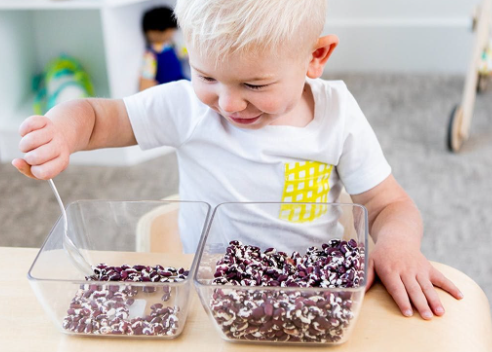
Montessori education emphasizes hands-on learning and encourages children to explore their environment. One of the best ways to incorporate Montessori activities into daily life is by using household items. This approach not only promotes creativity but also allows for practical life skills development.
1. Sorting with Kitchen Utensils
Sorting activities can be exciting and educational for children. By using various kitchen utensils, you can create a fun sorting game that helps improve fine motor skills and cognitive recognition. For example, offer your child a variety of spoons, forks, and knives and ask them to sort them into separate containers. This not only teaches them about each utensil but also encourages their independence as they take responsibility for household tasks.
Additionally, you can introduce other household items such as measuring cups and spatulas for a more complex sorting experience. You might also try using items of different colors and sizes, allowing your child to categorize by visual attributes. This can spark discussions about colors, shapes, and even measurements, enhancing their learning experience.
-
- Gather assorted kitchen utensils.
-
- Provide different containers for sorting.
-
- Encourage your child to name items as they sort.
-
- Discuss colors and shapes during the activity.
2. Water Play with Household Items
Water play is a cherished Montessori activity that offers sensory stimulation and fine motor skill development. You can set up a water play station using items like colanders, cups, and sponges. Fill a shallow tray with water and let your child explore how these items interact with the water. They can pour, squeeze, and even transfer water between different containers, which aids in developing hand-eye coordination.
In addition, you can incorporate measuring spoons or cups to teach your child about volume and measurement. This practical application of math concepts makes learning fun by blending education with play. To keep the experience interesting, introduce toys or other items, such as rubber ducks or plastic balls, and incorporate games like sinking and floating. This adds an element of excitement while also encouraging discussions on buoyancy and water properties.
-
- Set up a safe water play station.
-
- Incorporate various containers for pouring.
-
- Introduce different textures like sponges and towels.
-
- Discuss concepts of volume and measurement.
3. Art with Recyclables
Turning recyclables into art projects is a fantastic way to inspire creativity while teaching children about sustainability. Gather items such as cardboard boxes, plastic bottles, and newspapers. Let your child decide on their project, whether it be building a sculpture or creating collages. This encourages creativity and critical thinking as they decide how to use each item.
Moreover, using recyclable materials teaches children responsibility towards the environment. It promotes discussions about recycling and how they contribute to sustainability. You can guide them by showing them how to safely cut or manipulate materials, boosting their fine motor skills. As an added benefit, you can create themed art sessions, such as creating animals or vehicles, providing structure to their creativity.
-
- Collect various recyclable materials.
-
- Set clear parameters for project types.
-
- Supervise for safety during cutting or manipulating items.
-
- Encourage discussion about recycling and its importance.
4. Sensory Exploration with Textiles
Textiles around the home can offer a variety of sensory experiences for children. Select a range of fabric samples, such as cotton, silk, or wool, and encourage your child to explore textures. This could involve simple activities such as touching, rubbing, or even sorting fabrics by feel. This activity is particularly effective in enhancing sensory awareness and vocabulary development.
Additionally, you could create a simple tactile book by sewing or gluing fabric scraps onto pages. This not only boosts fine motor skills but also fosters creativity as your child designs their own book. Allow them to take charge of which fabrics to use and how to arrange them. Discussing each fabric’s unique properties can help expand your child’s understanding of materials and textures.
-
- Gather different types of fabric samples.
-
- Promote touch and exploration of each textile.
-
- Encourage your child to describe textures.
-
- Consider making a tactile book together.
Incorporating Montessori activities using household items is a great way to stimulate your child’s development and creativity. By turning everyday objects into learning tools, you can foster a sense of independence and curiosity. Start with one activity today, and watch your child thrive in their exploration and learning journey!