
The Montessori method promotes hands-on learning that nurtures a child’s natural curiosity, making it perfect for toddlers at home. Here, we’ll explore engaging Montessori activities that can easily be incorporated into your daily routine, giving toddlers the opportunity to learn through play.
1. Practical Life Skills Activities
Practical life skills are essential for toddlers as they help develop independence, concentration, and coordination. Simple activities like pouring water, spooning beans, or folding cloths not only keep your little ones engaged but also foster their ability to perform daily tasks. Set up a dedicated space where they can practice these skills without worry, perhaps using a low table or a mat to contain any potential mess.
These activities can be customized according to what you have at home. For instance, you can use two small bowls and some dried rice or pasta for a pouring activity. You can also introduce a small broom and dustpan so they can clean up spills, teaching them responsibility while developing their motor skills.
-
- Set up a dedicated space for practical life activities.
-
- Introduce activities gradually to avoid overwhelming your toddler.
-
- Use everyday items like cucumbers and carrots for cutting practice.
-
- Create a routine that includes these activities daily.
2. Sensorial Activities for Exploration
Sensorial activities stimulate a toddler’s senses and enhance their understanding of the world around them. Incorporating items with different textures, colors, and shapes provides ample opportunities for exploration. You can create a “sensory bin” filled with rice, sand, or water, and include scoops, cups, and various small toys for them to discover.
Another great idea is to create a treasure hunt using natural items like leaves, stones, or flowers. Encourage them to describe how each item feels, smells, or looks. This not only helps with sensory identification but also enriches their vocabulary and enhances observation skills.
-
- Create sand, rice, or water sensory bins for tactile exploration.
-
- Introduce textures through cloths, sponges, and natural objects.
-
- Encourage descriptive language when discussing sensory experiences.
-
- Rotate the contents of your sensory bin regularly to maintain interest.
3. Creative Arts and Crafts Activities
Artistic expression is a crucial component of the Montessori method. Encourage your child to explore various art mediums such as painting, coloring, and crafting without the pressure of perfection. Provide them with a range of supplies like non-toxic paints, crayons, scissors, and recycled materials, allowing their creativity to flow freely.
One engaging activity is to create a “nature collage.” Collect items from outside like leaves, flowers, and twigs and use them alongside paper and glue to compose art pieces. This integrates sensory exploration with creativity while teaching them about nature and textures.
-
- Provide a variety of art supplies for creative exploration.
-
- Encourage process over product; celebrate their effort rather than the outcome.
-
- Organize art projects around seasons or themes.
-
- Display their artwork proudly to build confidence.
4. Language and Literacy Activities
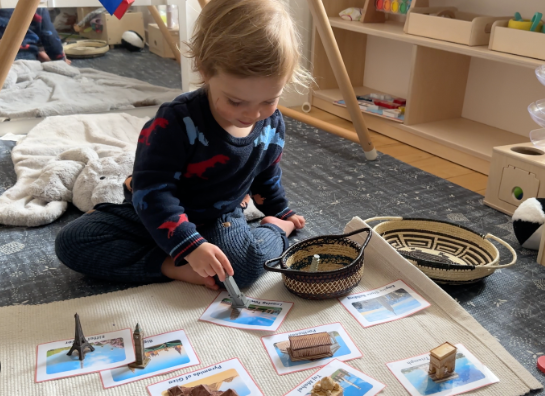
Language development in toddlers can be significantly enhanced through engaging activities. Reading books together, singing songs, and practicing simple vocabulary through games can create a rich language environment. Incorporate picture cards with words or objects that they can match to reinforce their learning.
Create a “word wall” using pictures and labels of items found in your home. As your toddler becomes familiar with words, involve them in storytelling where they can express their thoughts and feelings about the pictures. This helps in cognitive development while making learning enjoyable.
-
- Read together daily to spark interest in stories.
-
- Create matching games using picture cards and words.
-
- Incorporate songs and rhymes to make language fun.
-
- Encourage storytelling using simple prompts.
5. Math and Logic Activities
Introducing basic math concepts early on can set a solid foundation for numeracy skills. Use everyday items to introduce counting, sorting, and measuring. For instance, you can use blocks or toys for counting exercises or sorting by size, color, or shape. This hands-on practice allows toddlers to visualize mathematical concepts in a fun and engaging way.
Puzzles are another great tool; they teach problem-solving skills and logical thinking. Choose puzzles that match your child’s interests and challenge them appropriately. Activities like these make math less intimidating and encourage an early love for numbers.
-
- Use everyday items for counting and sorting activities.
-
- Incorporate puzzles to enhance logical thinking.
-
- Make math fun with games that involve numbers.
-
- Encourage discussions about quantities and shapes whenever possible.
Engaging your toddler in Montessori activities at home can significantly enrich their learning experience. By offering a diverse range of practical, sensorial, artistic, language, and math activities, you support their development in a holistic manner. Start integrating these ideas today, and you will likely witness your child’s growth and curiosity flourish.