
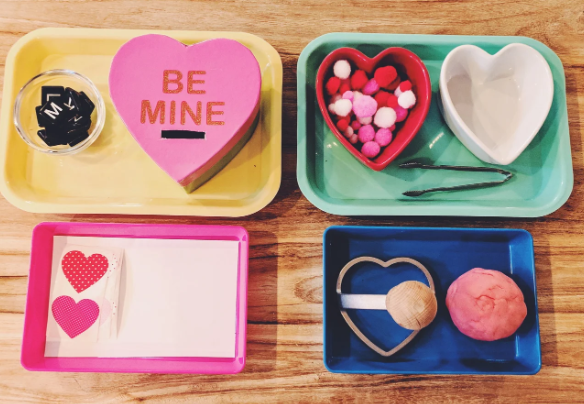
Valentine’s Day is a wonderful opportunity to foster creativity and social skills in children using the Montessori method. This approach emphasizes hands-on learning and independence, making it perfect for celebrating love and friendship through engaging activities. Below are some delightful Montessori-inspired Valentine activities that you can easily incorporate into your child’s learning routine.
1. Heart-Shaped Cutting Practice
One of the essential skills children develop in the Montessori classroom is fine motor coordination. Cutting shapes is a fun way to enhance these skills. Introduce heart-shaped templates that children can cut out from colorful, textured paper. This activity not only strengthens their hand muscles but also allows them to explore colors and patterns.
To make this activity even more engaging, you can encourage children to decorate the hearts with stickers, glitter, or even their drawings. This adds a layer of creativity and personalization, making the final product more meaningful. As they cut and decorate, they learn to appreciate the process and the effort involved in creating something special.
-
- Provide safety scissors designed for children.
-
- Use a variety of textured papers to spark interest.
-
- Encourage sharing all materials to foster collaboration.
-
- Display completed hearts on a wall or in a special place.
2. Valentine’s Day Sensory Bin
Creating a Valentine’s Day sensory bin is an excellent way for young children to explore different textures and materials. Fill a large container with items like dried rice, red and pink pom-poms, heart-shaped beads, and miniature toys. The goal is to allow children to discover and manipulate these items, enhancing their sensory awareness and fine motor skills through exploratory play.
You can also include measuring cups and scoops to encourage children to practice pouring and transferring materials. This activity allows for imaginative play while also teaching mathematical concepts like volume and measurement. The sensory bin can be a focal point for discussion as children talk about the colors, shapes, and textures they find.
-
- Choose safe, non-toxic materials for the bin.
-
- Rotate new items in to keep interest alive.
-
- Use language to describe what they feel and see.
-
- Invite children to add items they find at home.
3. Friendship Cards and Notes
As Valentine’s Day emphasizes love and friendship, crafting cards is a wonderful activity that teaches children about expressing feelings and showing appreciation. Set up a crafting station with various art supplies such as colored paper, markers, and stamps. Children can design their own cards for family, friends, or even pets, enhancing their emotional intelligence and creativity.
Encourage children to write messages or draw pictures inside the cards, fostering their literacy skills. This activity can be made more meaningful by discussing the importance of gratitude and friendship, perhaps sharing stories about their own friends. Once finished, they can exchange cards, which helps them practice social etiquette and sharing.
-
- Provide different templates to inspire creativity.
-
- Discuss what makes a good friend while crafting.
-
- Have a designated “mailbox” for exchanging cards.
-
- Encourage personal messages to strengthen connections.
4. Valentine’s Day Baking
Baking is a delightful Montessori-based activity that teaches practical life skills while indulging in a sensory experience. Valuing the process of measuring, mixing, and creating can be both educational and satisfying. For Valentine’s Day, consider making heart-shaped cookies or muffins. This introduces children to concepts of measurement, following instructions, and the joy of sharing delicious treats.
Allow children to select ingredients, measure them out, and mix them together, engaging their sense of taste and smell. Once baked, they can decorate the treats with icing, sprinkles, and edible glitter, adding a personal touch. This not only reinforces math and science concepts but also initiates discussions about healthy eating and sharing with others.
-
- Use simple, recognizable recipes for easy understanding.
-
- Allow children to help choose flavors and decorations.
-
- Discuss food safety and hygiene before starting.
-
- Encourage taste-testing at various stages.
5. Nature-Based Valentine’s Day Art
Encouraging children to explore nature provides them with opportunities to create art using found materials. A nature-based art project can include collecting leaves, flowers, or twigs that can be transformed into Valentine-themed crafts. This activity connects children to the environment while using creativity to make art. They might create heart shapes or other designs that reflect the beauty of nature.
You can seal twigs together using glue to form hearts and add natural elements as decorations. Discuss the different shapes and colors they observe in nature as they work. This also educates them about biodiversity and the importance of caring for the environment while indulging their artistic impulses.
-
- Organize a nature walk to collect materials.
-
- Encourage dialogue about biodiversity during the walk.
-
- Provide natural paints or watercolors made from plants.
-
- Promote respect for natural materials by only using what is needed.
Montessori Valentine activities can be a blend of education, creativity, and fun, providing children with tools to express themselves and understand the concept of love and friendship. By integrating hands-on activities, you encourage a love for learning that extends beyond Valentine’s Day. So gather your materials, stimulate your child’s creativity, and enjoy the process together!