
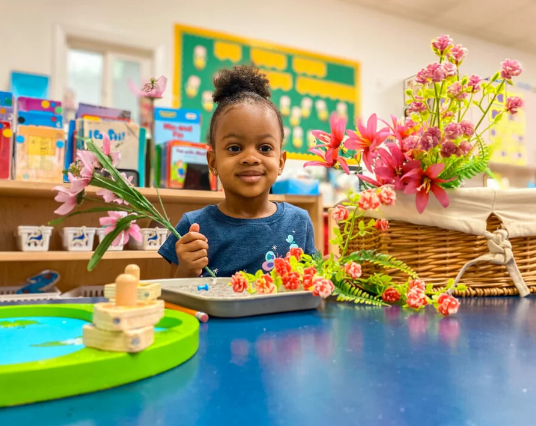
Montessori education emphasizes hands-on, experiential learning, particularly effective for preschoolers. By engaging children in activities that promote independence and critical thinking, the Montessori method nurtures a child’s natural curiosity and desire to learn.
1. Practical Life Skills
Practical life skills are essential components of the Montessori curriculum, designed to foster independence and coordination. Activities like pouring, buttoning, or sweeping allow children to learn about everyday tasks while developing fine motor skills. For example, pouring water from one jug to another helps a child master hand control and focus.
To implement these activities at home or in a classroom, create an area dedicated to practical life exercises. Use accessible materials that are safe and appropriate for preschoolers, like small pitchers, utensils, or sponges. This type of environment encourages exploration and allows children to practice responsible and caring behaviors.
-
- Set up a dedicated space for practical life activities.
-
- Choose materials that are age-appropriate and safe.
-
- Rotate activities to maintain interest and engagement.
-
- Encourage children to clean up after themselves to foster responsibility.
2. Sensorial Activities
Sensorial activities in Montessori education are aimed at developing a child’s senses and enhancing their ability to observe, compare, and categorize experiences. These activities include sorting objects by color, shape, or texture, and using sound boxes or smell jars to differentiate various stimuli. Such exercises not only sharpen sensory awareness but also promote language development as children learn to describe their observations.
When introducing sensorial activities, utilize everyday items that are easy to find. For example, create a texture board using materials like sandpaper, silk, and cotton to allow children to compare different textures. These engaging activities help children learn about the world around them while honing their cognitive skills.
-
- Use household items to create a variety of sensory experiences.
-
- Encourage children to use descriptive language when exploring.
-
- Incorporate nature elements, like leaves or flowers, for rich sensory experiences.
-
- Make it a routine so children can expect and look forward to these activities.
3. Creative Arts and Crafts
Creative arts and crafts are vital in the Montessori method, encouraging self-expression and imagination. Activities like painting, clay modeling, or collage-making allow children to experiment with colors, shapes, and textures, helping develop creative thinking and problem-solving skills. For instance, using different mediums like watercolors or crayons can introduce young children to various artistic techniques and inspire them to express their thoughts and emotions.
To make arts and crafts engaging, provide a variety of materials and tools, letting children choose their projects. Instead of leading a specific art task, guide them to explore their creativity freely, fostering a sense of personal accomplishment and ownership over their work.
-
- Offer a wide range of materials for children to choose from.
-
- Encourage original creations rather than replicating examples.
-
- Create a dedicated and mess-friendly space for arts and crafts.
-
- Display finished artworks to validate children’s efforts and creativity.
4. Language Development Activities
Language development is significant in Montessori education, and various activities can help preschoolers enhance their vocabulary and communication skills. Storytelling, vocabulary games, and phonics activities play a crucial role in helping children learn new words and understand the structure of language. Making a word wall with familiar vocabulary also offers visual support, enabling children to connect images with words.
When working on language skills, introduce books in diverse genres to entice children’s interests. Encourage them to narrate stories using pictures or even act them out, promoting not only language skills but also confidence in public speaking. These interactions create a rich linguistic environment and inspire a love for reading.
-
- Incorporate interactive stories that children can engage with.
-
- Encourage daily reading at home or in group settings.
-
- Use games that focus on words, rhymes, or sounds.
-
- Provide a variety of books covering different themes and topics.
Incorporating Montessori activities into preschoolers’ routines can significantly benefit their holistic development. By promoting independence and creativity through engaging tasks, you’re setting the groundwork for lifelong learning. Explore these activities further and consider implementing them in daily life for enriching developmental experiences.