
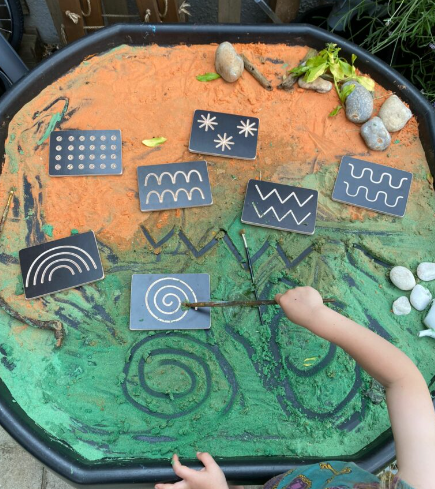
Montessori sand play activities provide children with a unique opportunity to explore their creativity while developing crucial skills. These activities encourage sensory exploration, imaginative play, and fine motor development, all within a structured environment that promotes independence and self-directed learning. In this blog post, we will dive into various Montessori sand play activities that can be easily incorporated at home or in educational settings.
1. Building Sand Structures
One of the most engaging Montessori sand play activities is building sand structures. Children can use their hands, shovels, or molds to create castles, towers, or other creative designs. This activity not only spurs imagination but also teaches concepts of balance, gravity, and spatial awareness. By working with different shapes and sizes, children can learn about geometry while having fun in the sand.
To facilitate this activity, it’s essential to provide a variety of tools. Buckets, shovels, and sand molds can all enhance the experience. Allow children to experiment with wet and dry sand to understand how moisture affects structure stability. Encourage them to collaborate and share ideas, fostering teamwork and communication skills.
-
- Set up a designated sand play area with sufficient space.
-
- Provide various tools: buckets, shovels, molds, and even natural items like sticks or leaves.
-
- Encourage children to plan their structure before building.
-
- Promote teamwork by allowing kids to work on projects together.
-
- Discuss architectural concepts such as shapes and balance.
2. Sensory Exploration with Sand
Montessori sand play is all about sensory exploration, and engaging children’s senses can significantly enhance their learning. By allowing them to sift, pour, and manipulate sand, they can discover different textures and sensations. This exploration can also help improve hand-eye coordination and fine motor skills, especially when they are filling containers or creating small sculptures.
In addition to traditional sand, you can introduce colored sand or add items such as shells, stones, or beads to create a rich, tactile experience. Providing tools like scoops and funnels allows children to experiment with pouring and measuring, deepening their understanding of volume and quantity. These small actions can encourage mathematical concepts while still providing an enjoyable play experience.
-
- Introduce a variety of sand types, like colored sand or kinetic sand.
-
- Include natural elements such as pebbles or shells.
-
- Use scoops and funnels for pouring activities.
-
- Encourage children to close their eyes and describe what they feel.
-
- Incorporate music or storytelling to enrich the sensory experience.
3. Thematic Sand Play
Thematic sand play activities can transform a simple sand box into an educational adventure. By adding thematic elements related to seasons, world cultures, or even stories, you can enhance a child’s imaginative play and learning experience. For example, creating a beach theme with toy sea creatures and beach items introduces marine biology while keeping playtime fun.
Another popular theme is the construction site, where children can utilize trucks and tools to represent building activities. This allows them to engage in role-playing while learning about different professions and teamwork. Changing themes regularly can keep the activities fresh and exciting, ensuring children remain engaged while meeting varied learning objectives.
-
- Choose a theme—beach, construction, or a favorite story.
-
- Gather themed toys, materials, and props to enhance play.
-
- Discuss the theme with children to encourage creativity.
-
- Rotate themes weekly or monthly to keep interest high.
-
- Document what children create and discuss their ideas.
4. Sand Play and Science Experiments
Integrating science experiments into sand play activities can ignite a child’s curiosity about the world around them. Some simple yet effective experiments include observing how water affects sand structure, testing how different amounts of sand behave when poured, or examining the impact of wind on loose sand. Such activities reveal fundamental scientific principles while allowing for hands-on learning.
To create a scientific atmosphere, encourage children to ask questions, make predictions, and record their observations. For example, which structure holds up better in wet sand versus dry sand? This inquiry-based approach helps children develop critical thinking and reasoning skills while enjoying their time in the sand.
-
- Introduce basic science concepts related to sand and water.
-
- Use measuring cups to compare different amounts of sand.
-
- Encourage children to formulate hypotheses prior to experiments.
-
- Create a science journal for children to document findings.
-
- Conduct experiments outdoors to observe real-world variables.
Montessori sand play activities offer a wealth of learning opportunities that combine sensory engagement, creative expression, and scientific inquiry. By incorporating these activities at home or in a classroom setting, you can nurture children’s development while fostering independence and imagination. Consider introducing these practices into your routine to create a richer play experience for your children.