
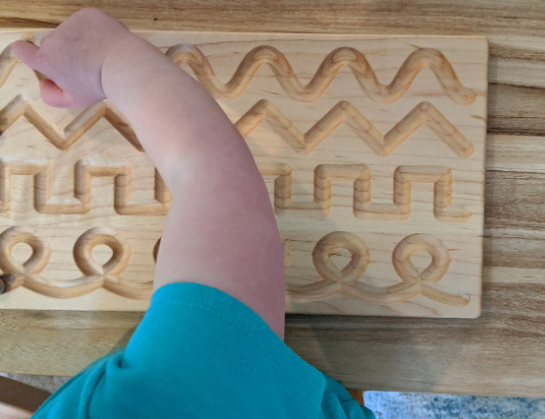
Montessori Letter Activities provide a unique and engaging way to introduce children to the fundamentals of reading and writing. These hands-on experiences not only stimulate their natural curiosity but also foster a love for learning. In this blog post, we will explore several effective Montessori-inspired activities designed to help kids master the alphabet.
1. Sandpaper Letters: Feel the Alphabet
Sandpaper letters are one of the quintessential Montessori tools for letter recognition. These tactile letters allow children to trace the shapes of the letters with their fingers, reinforcing their memory through touch. When children trace the sandpaper letters, they not only learn the shape but also practice the correct stroke order, which is essential for writing later on.
Parents and educators can create their own sandpaper letters by adhering sandpaper onto cardstock in the shape of each letter. This DIY approach can be customized by selecting different colors or textures to make learning more exciting. To enhance this activity, encourage children to say the sound of each letter as they trace it, further embedding the connection between the letter and its phonetic sound.
-
- Gather materials: cardstock, sandpaper, and scissors.
-
- Create both uppercase and lowercase letters.
-
- Use child-safe glue to adhere the sandpaper to the cardstock.
-
- Encourage verbalization of the letter sounds during tracing.
2. Alphabet Matching Games: Connecting Fun and Learning
Alphabet matching games are a fantastic way for children to recognize letters and associate them with their corresponding sounds or objects. This activity fosters not only visual recognition but also memory skills and phonetic understanding. You can easily set up a matching game using flashcards or objects around the home that start with each letter.
For example, prepare a set of cards with letters on one side and pictures of objects that begin with those letters on the other, such as “A” for apple and “B” for ball. Children can have fun flipping the cards and matching the letter to its respective image. Engaging in conversations about the items will further reinforce their understanding of the alphabet and its applications in their everyday lives.
-
- Prepare flashcards with letters on one side.
-
- Add corresponding object images to the reverse side.
-
- Encourage discussions about each matched object.
-
- Use colorful visuals to keep interest high.
3. Alphabet Scavenger Hunts: A Quest for Learning
An Alphabet Scavenger Hunt combines physical activity with learning, making it an engaging way to teach children about letters. This interactive activity encourages children to explore their environment and reinforces letter recognition in real-world contexts. You can create a list of letters and ask children to find objects that start with each letter.
For instance, if you’re hunting for the letter “C,” a child might find a cup, a cat, or a cookie. To make the activity more educational, use a notebook for children to write down what they find, which also paves the way for practicing their writing skills. This activity can take place indoors or outdoors, making it versatile and adaptable to any setting.
-
- Create a list of letters to find.
-
- Encourage children to write down their findings in a notebook.
-
- Incorporate both indoor and outdoor settings for exploration.
-
- Make it a group activity for social engagement.
4. Playdough Letters: Shape and Sculpt the Alphabet
Working with playdough is not only fun but also excellent for developing fine motor skills, which are essential for writing. Children can mold playdough into the shapes of letters, enhancing their understanding of letter formation in a tactile manner. This activity allows children to experiment with different sizes and shapes, fostering creativity while reinforcing their knowledge of the alphabet.
To get started, provide children with different colors of playdough and guide them in creating both uppercase and lowercase letters. For an added twist, you can encourage children to create objects or animals that start with the letters they form. This builds connections between letters and their meanings while keeping learning playful and enjoyable.
-
- Provide colorful playdough and allow for creativity.
-
- Encourage formation of both uppercase and lowercase letters.
-
- Suggest modeling objects that correspond to the letters.
-
- Incorporate letter sounds during the creation process.
5. Letter Tracing with Watercolors: A Colorful Approach
Using watercolors to trace letters not only makes the activity visually stimulating but also develops a child’s artistic skills alongside their letter recognition. This engaging approach invites children to paint over letters printed on paper, enhancing their memory through creative expression. The process of using a brush helps in refining their hand control, which is essential for later writing tasks.
To implement this activity, print out sheets with dotted or outlined letters and set up a watercolor palette. Children can dip their brush in watercolors and trace over the letters, adding their own flair. This creates a fun and aesthetically pleasing way to learn about letters while simultaneously embracing their artistic side.
-
- Create letter tracing sheets with outlined letters.
-
- Set up a watercolor palette and brushes.
-
- Encourage personalization of letters through color choices.
-
- Discuss the sounds of letters while tracing.
Implementing Montessori Letter Activities can transform the learning experience for children by making it interactive and enjoyable. By using hands-on and engaging methods, you will help instill a love for learning that lasts a lifetime. Whether at home or in a classroom, these activities encourage exploration and creativity in mastering the alphabet. Start incorporating these activities into your routine today to inspire a new generation of eager learners!