
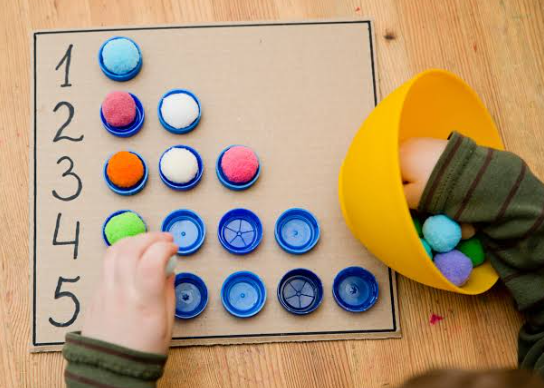
Montessori education emphasizes hands-on learning and self-directed activity, making it an excellent approach for teaching preschoolers foundational skills, including numbers. Engaging in number activities not only helps children understand mathematical concepts but also cultivates a love for learning. In this blog post, we will explore a variety of Montessori-inspired number activities that can easily be implemented at home or in the classroom.
1. Number Recognition with Nature
One effective way to teach preschoolers number recognition is by incorporating elements from nature. A simple activity involves collecting leaves, stones, or flowers, and assigning a number to each one. For example, gather five leaves and place them in a designated area while saying, “One leaf, two leaves,” and so on. This tactile experience allows children to connect numbers with physical objects, enhancing their understanding of quantity and counting.
Parents can also create a nature-inspired number line using twigs and stones. This visual and physical representation of numbers helps children see relationships between numbers as they can compare and manipulate the objects. Encourage them to arrange the stones in ascending or descending order and even create simple equations with their natural finds.
-
- Collect a variety of natural items for counting.
-
- Encourage descriptive language while identifying the items.
-
- Utilize simple number cards alongside the natural items.
-
- Incorporate sorting activities based on size or type.
2. Sandpaper Numbers for Tactile Learning
Montessori education often leverages the sense of touch to reinforce learning. Sandpaper numbers are an excellent tool for preschoolers to practice both recognition and formation. These numbers, typically made of sandpaper on sturdy boards, are tactile and inviting. Children can trace the numbers with their fingers, feeling the texture while simultaneously saying the number aloud. This multisensory approach solidifies their understanding and memory.
To enhance this activity, incorporate a writing utensil after tracing. Children can practice writing the numbers in the air or on paper. Encourage them to use various writing materials, such as crayons, markers, or even finger paint, to make the learning process more enjoyable. This progression allows them to move from tactile tracing to independent writing confidently.
-
- Make your own sandpaper numbers or buy them from a store.
-
- Provide a quiet space for tracing and writing.
-
- Encourage verbal repetition while tracing numbers.
-
- Introduce numbers one at a time to avoid overwhelming them.
3. Counting with Everyday Objects
Using everyday objects for counting provides practical examples of math in the real world. Encourage children to use items like building blocks, buttons, or even kitchen utensils as counting tools. This activity not only reinforces counting skills but also develops fine motor skills as children manipulate these objects. For instance, they can build a tower with blocks while counting them out loud, thus reinforcing both counting and spatial awareness.
In addition to simply counting, introduce simple addition and subtraction using these objects. For example, take away a few blocks and ask how many are left. This method allows children to visualize mathematical operations, fostering a deeper understanding of number concepts beyond just memorization.
-
- Select various common household items to encourage creativity.
-
- Set up counting challenges or games with these objects.
-
- Engage in discussions about quantities while counting.
-
- Encourage sharing and cooperating with others during activities.
4. Musical Number Games
Combining music with number activities gives preschoolers a fun and energetic way to learn. Create number songs that incorporate counting, such as songs that count to ten or even fun rhymes like “Five Little Ducks.” Singing about numbers not only helps embed them in their memory but also improves listening skills and pronunciation.
Another engaging game involves musical chairs with a twist: use number cards instead of seats. When the music stops, children must find a number card and perform a related activity, like counting to that number or showing that many fingers. This approach infuses excitement into learning while also working on social skills.
-
- Use catchy tunes or existing children’s songs that include numbers.
-
- Create rhythm-based activities to engage children fully.
-
- Incorporate movement to add physical activity to learning.
-
- Encourage children to create their own number songs.
5. Playful Math Puzzles and Games
Puzzles and board games provide an enjoyable way for preschoolers to engage with numbers. Choose games that focus on counting, number recognition, and basic math skills. For instance, large floor puzzles featuring numbers or counting themes can captivate their attention while teaching them essential skills. As children assemble the puzzle, encourage them to say the numbers or count pieces aloud.
Additionally, bring in board games that involve dice, allowing them to practice addition and subtraction. Games like “Chutes and Ladders” encourage counting and strategic thinking while ensuring a fun and friendly atmosphere. This reinforcement through play fosters a love for mathematics and increases their confidence in handling numbers.
-
- Choose age-appropriate puzzles and board games.
-
- Encourage turn-taking and sharing during game play.
-
- Use game pieces to reinforce counting skills.
-
- Celebrate their achievements and progress in games.
Montessori number activities provide a wealth of opportunities for preschoolers to explore and understand numbers. By integrating nature, tactile experiences, daily living objects, music, and playful puzzles, children can develop essential math skills in engaging ways. Encouraging these activities at home or in educational settings can lay the groundwork for a lifetime of learning.