
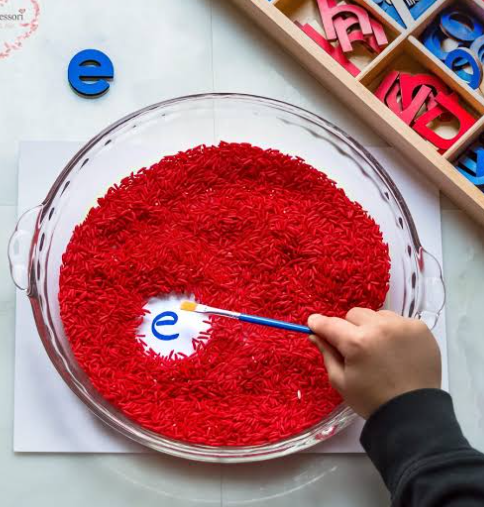
Montessori alphabet activities offer an engaging way for preschoolers to learn about letters and language. By incorporating sensory experiences and hands-on activities, these tasks can complement traditional learning and enhance a child’s natural curiosity.
1. Letter Matching with Sandpaper Letters
One classic Montessori activity involves using sandpaper letters. These tactile letters allow children to feel the shape and form of each letter while also practicing the correct way to trace them. By engaging their senses, preschoolers can better internalize the shapes and sounds of the alphabet. To begin, caregivers can introduce a few letters at a time to avoid overwhelming the child.
As the child progresses, you can encourage them to match the sandpaper letters with corresponding objects or pictures that start with that letter’s sound. For example, the letter “B” can be paired with a picture of a ball or a banana. This dual approach of sensory and auditory learning reinforces recognition and comprehension.
-
- Start with lowercase letters to match their everyday usage.
-
- Include a few upper-case letters to expand their knowledge.
-
- Encourage sound pronunciation with each letter they touch.
-
- Rotate letters regularly to keep activities fresh and interesting.
2. Alphabet Scavenger Hunt
An alphabet scavenger hunt is a fun way to explore the environment while reinforcing letter recognition. This activity turns everyday surroundings into an interactive learning space. Caregivers can create a list of letters and ask children to find objects that start with each letter. For instance, “A” might correspond to an apple found in the kitchen, while “C” could represent a cat in the yard.
After collecting the items, you can discuss each object and its corresponding letter. This reinforces not only letter recognition but also vocabulary development and listening skills. To further enhance the experience, parents can accompany children on their scavenger hunt, adding an element of collaboration and exploration.
-
- Prepare a printable scavenger hunt checklist for easy tracking.
-
- Use environmental markers (trees, playground equipment) to expand the hunt.
-
- Encourage children to say the letter aloud upon finding the item.
-
- Document the findings with photographs for fun memories!
3. Alphabet Art Station
An art station dedicated to creating letters can foster both creativity and letter recognition. Offer materials such as play dough, crayons, and various craft supplies so children can construct or draw their favorite letters. For example, they can use play dough to form the letters and even spell out simple words, encouraging a multi-sensory approach to learning.
In addition to classic art supplies, you can include natural elements like leaves or stones for making textured letter forms. Letting children express themselves creatively while learning adds a layer of enjoyment and excitement that reinforces the learning experience. Make sure to display their creations in the classroom or at home to boost their confidence.
-
- Set up a dedicated art space free from distractions.
-
- Encourage a connection between letter forms and corresponding words.
-
- Incorporate various sensory elements in crafting activities.
-
- Rotate materials regularly to maintain engagement and intrigue.
4. Alphabet Story Time
Integrating storytelling into alphabet activities can captivate a child’s attention and imagination. Read books that focus specifically on the alphabet or stories where each page highlights a letter. Books like “Chicka Chicka Boom Boom” make the letters come alive, engaging children visually and verbally. As you read, pause to ask questions about the letters and sounds to involve them actively.
To enhance comprehension, invite children to create their own stories using their favorite letters and characters. This can lead to rich discussions about sounds, words, and connections between letters and sounds. Creating storyboards or simple illustrations alongside their narratives can provide additional engagement and serve as a teaching tool.
-
- Curate a selection of alphabet-themed books for storytime.
-
- Encourage active participation by asking predictive questions.
-
- Utilize props or puppets related to the story to stimulate creativity.
-
- Encourage children to tell their own stories incorporating letters learned.
Montessori alphabet activities can transform the learning experience for preschoolers, making it more interactive and enjoyable. By using these diverse approaches, parents and educators can foster a love for language that extends far beyond the classroom. So grab some materials and get started on an exciting learning adventure!