
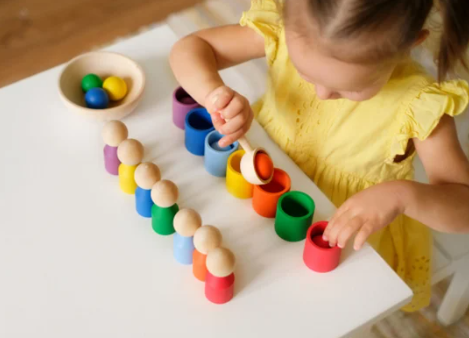
Montessori visual discrimination activities are designed to foster a child’s ability to recognize differences and similarities among objects and images. These skills are vital for early learning and development, enhancing both cognitive and observational abilities. Engaging young learners through these activities can help lay a strong foundation for their academic journey.
1. Understanding Visual Discrimination
Visual discrimination is the ability to distinguish between different shapes, sizes, colors, and patterns. Children use this skill in their daily lives, from recognizing letters and numbers to identifying objects in their environment. By honing their visual discrimination skills, children can improve their reading and writing abilities, making this an essential component of kindergarten readiness.
In a Montessori setting, visual discrimination activities often involve hands-on materials that stimulate children’s curiosity. For instance, a teacher might present a sorting tray with a variety of colored buttons for children to categorize by color, shape, or size. This activity not only reinforces visual discrimination but also encourages fine motor skills and independent decision-making.
-
- Introduce varied shapes, colors, and sizes to enhance recognition.
-
- Use manipulatives like blocks or colored beads for hands-on learning.
-
- Create sorting games with everyday objects around the house.
-
- Incorporate visual discrimination into storytime with picture books.
2. Engaging Activities for Home and Classroom
Montessori visual discrimination activities can be seamlessly integrated into both home and classroom settings. Simple games such as “I Spy” encourage children to focus on specific details of their surroundings, promoting active observation. Additionally, puzzles and matching games that involve pieces with similar but distinct features can deepen children’s understanding of visual elements.
Another effective activity is the use of perception cards, where children are asked to match cards based on visual similarities or differences. For example, one card might feature a blue triangle while another displays a red triangle. Having children explain their reasoning reinforces their critical thinking alongside their visual skills. Such activities not only support learning but also strengthen peer interaction and collaboration.
-
- Incorporate games like “I Spy” during walks or car rides.
-
- Create custom matching cards using family photographs.
-
- Use puzzles that involve shape recognition to reinforce learning.
-
- Implement group activities to foster collaboration among peers.
3. Fine Motor Skills and Visual Discrimination
Fine motor skills are closely linked to visual discrimination, and Montessori activities often combine both for effective learning. Simple tasks like stringing beads or using tweezers to move small objects can enhance hand-eye coordination while promoting visual differentiation. Through such activities, children are not only learning to classify and categorize but are also developing the dexterity needed for writing and other academic skills.
A great way to merge these skills is through art projects where children use various materials to create visual representations. Activities like cutting shapes out of different colored paper or using clay to mold objects also cultivate visual awareness. As children engage in these creative tasks, they’re not just having fun; they are also refining their visual and motor skills simultaneously.
-
- Encourage activities that require precise hand movements, like bead threading.
-
- Utilize art supplies to foster creativity while practicing visual recognition.
-
- Provide opportunities for children to manipulate objects in their environment.
-
- Monitor children’s emerging skills and challenge them with new tasks.
4. Assessing Visual Discrimination Progress
It’s essential to monitor a child’s progress in visual discrimination as they engage with various activities. Simple observational assessments can be made during playtime or structured activities. For instance, you might take note of how easily a child completes a sorting game, or observe their ability to describe differences between similar objects. This feedback can provide valuable insights into their development.
Additionally, using checklists can be beneficial in tracking specific skills over time. Creating a visual record of successes, such as completed activities and improvements observed, empowers both children and parents to celebrate milestones. Regularly reflecting on these practices can inform future learning opportunities and demonstrate tangible growth.
-
- Keep a visual monitoring chart of activities completed and skills demonstrated.
-
- Provide constructive feedback to encourage further exploration.
-
- Celebrate achievements, no matter how small, to boost confidence.
-
- Adjust activities based on observed abilities to keep learning engaging.
In conclusion, incorporating Montessori visual discrimination activities into daily routines enriches both cognitive and fine motor skills in young children. By providing engaging, hands-on experiences, parents and educators can ensure that children develop essential skills for their educational journeys. Start implementing these activities today, and watch your child thrive!