
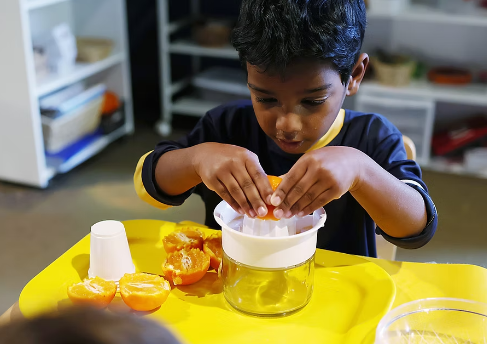
Montessori education emphasizes hands-on learning, particularly through Practical Life Activities. These activities help children develop essential life skills while fostering independence, concentration, and coordination. Let’s explore some key aspects of Montessori Practical Life Activities.
1. The Importance of Practical Life Activities
Montessori Practical Life Activities play a crucial role in a child’s development. They provide a foundation for everyday tasks, enabling children to become confident and self-sufficient. By engaging in these activities, children learn to take responsibility for themselves and their environment, which is vital for their emotional and social growth.
By practicing practical skills, children enhance fine motor skills, concentration, and problem-solving abilities. For instance, when a child pours water from one container to another, they not only improve their dexterity but also learn patience and focus. These fundamental skills are essential for academic learning and everyday life.
-
- Encourage children to express their own choices in activities.
-
- Provide age-appropriate materials for skill development.
-
- Incorporate daily routines to enhance life skills.
-
- Create a prepared environment that promotes independence.
2. Common Practical Life Activities in Montessori
There are various practical life activities that are commonly utilized in Montessori settings. Examples include cleaning, cooking, gardening, and self-care tasks. These activities not only keep children engaged but also help them understand the significance of these tasks in everyday life.
Gardening, for instance, offers a hands-on approach to understanding nature and responsibility. Children learn to plant seeds, water them, and observe their growth, developing a sense of accomplishment. Similarly, cooking activities teach children to measure ingredients and follow instructions, promoting cognitive skills in the process.
-
- Introduce tasks like sweeping, mopping, and dusting.
-
- Encourage children to help with meal preparation.
-
- Set up a small indoor garden for hands-on learning.
-
- Teach children the importance of personal hygiene through simple grooming tasks.
3. Creating a Practical Life Area at Home
Creating a dedicated Practical Life Area at home can enhance your child’s learning experience. This space should be safe, inviting, and stocked with materials that promote independence and curiosity. Organizing this area allows children to choose their activities freely, fostering a sense of ownership and motivation.
When setting up this area, consider including low shelves with accessible materials such as child-sized cleaning tools, gardening supplies, and sorting games. Labeling baskets and trays can also help children identify what to use and how to put items away. This structured approach encourages routine and discipline in activities.
-
- Design an intentional space that is easy for children to navigate.
-
- Incorporate various textures and materials to stimulate exploration.
-
- Ensure all items are age-appropriate and safe.
-
- Rotate activities regularly to maintain interest and challenge.
4. Observing and Supporting Your Child’s Progress
Monitoring your child’s engagement with Practical Life Activities is essential to support their development effectively. Observing how they approach tasks can give insights into their interests and areas where they might need encouragement. Regularly checking in allows you to provide constructive feedback and celebrate their achievements.
Supporting your child’s progress involves more than just setting up activities; it means stepping back when necessary, allowing them to problem-solve and learn from their mistakes. Positive reinforcement, such as praise for effort, helps cultivate a growth mindset, making children feel capable and confident in their abilities.
-
- Keep a journal to track your child’s progress over time.
-
- Encourage self-reflection by asking open-ended questions about their activities.
-
- Provide gentle guidance rather than direct intervention.
-
- Celebrate small accomplishments to motivate further efforts.
In conclusion, Montessori Practical Life Activities are fundamental for nurturing independence and essential skills in children. By integrating these practices into your home, you can foster a love for learning and help your child grow into a confident individual. Embrace the journey and encourage your child’s natural curiosity today!