
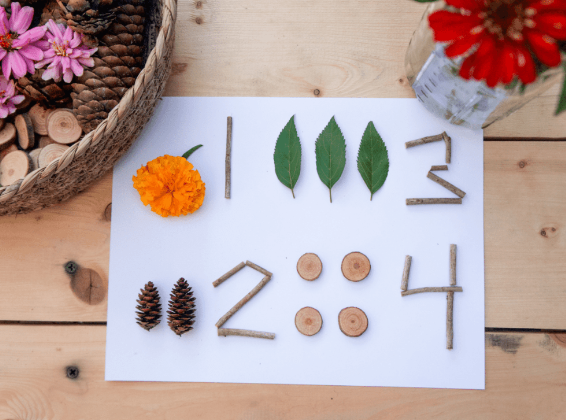
Montessori activities are an excellent way to foster problem-solving skills in children. These activities encourage independent thinking, creativity, and critical reasoning, which are essential for navigating both academic and everyday challenges. This blog will explore a variety of Montessori-inspired activities that can help children develop their problem-solving abilities.
1. Practical Life Activities
Practical life activities form the backbone of the Montessori method. These tasks mimic real-life scenarios and allow children to practice and solve everyday problems. For instance, pouring water from one pitcher to another not only improves motor skills but also teaches concepts of volume, balance, and concentration. Children often face challenges in mastering these tasks, which encourages them to think critically and find solutions.
Another example of a practical life activity is sorting laundry. Children can learn to categorize by color, fabric type, or size, which introduces them to the concept of organization. This simple task also imparts valuable lessons in responsibility and the importance of order, prompting children to devise systems that work for them when faced with various sorting challenges.
-
- Set up different practical life stations at home.
-
- Encourage children to choose and complete tasks independently.
-
- Observe and guide them through challenges they encounter.
-
- Incorporate variety to maintain engagement and interest.
2. Nature Exploration and Observation
Engaging with nature is an excellent avenue for fostering problem-solving skills. Observing plants, animals, and various ecosystems encourages children to ask questions and seek answers. For example, if a child finds a plant with unusual leaves, they may ponder why it has those characteristics. This natural curiosity can lead them to explore concepts like adaptation and classification.
Nature exploration can also involve environmental problem-solving tasks. For instance, children can be presented with the challenge of creating a small garden. They’ll need to investigate what plants thrive in their area, how much sunlight they might need, and the types of soil that will best support growth. This hands-on experience not only builds knowledge but enhances their ability to think critically about real-world issues.
-
- Encourage outdoor activities like hiking, gardening, or bird watching.
-
- Promote inquiry by asking open-ended questions about their observations.
-
- Provide them with resources for further research, like books or apps.
-
- Document findings to cultivate a sense of achievement.
3. Building and Construction Activities
Building and construction activities provide a tangible, hands-on experience for children to solve problems creatively. Using blocks, LEGO sets, or other materials encourages spatial reasoning and critical thinking. For example, when faced with the challenge of constructing a sturdy tower, children must consider factors such as balance, weight distribution, and structural integrity. These considerations promote logical reasoning and problem-solving strategies.
Moreover, collaborative building activities can foster teamwork and social problem-solving skills. By working together to create a project, children learn to listen, communicate, and compromise. This type of collaboration often leads to challenges, such as differing opinions on design, which require diplomatic, problem-solving skills to navigate and resolve effectively.
-
- Provide a variety of building materials for exploration.
-
- Encourage solo and group building projects.
-
- Ask children to describe their construction process and reasoning.
-
- Challenge them with specific criteria for their designs, like height or weight limits.
4. Puzzle and Game Activities
Puzzles and games are not only entertaining but also serve as effective tools for developing problem-solving skills. They require children to think critically, strategize, and analyze various outcomes. For example, a jigsaw puzzle promotes spatial reasoning and patience as children work through different pieces to find where they fit. Similarly, board games often require players to think several moves ahead, cultivating strategic thinking.
Incorporating games such as logic puzzles or brain teasers can also provide an excellent platform for enhancing problem-solving skills. These challenges encourage children to approach problems from different angles, fostering an understanding that there may be multiple solutions to a given issue. This reinforces the idea that problem-solving can be a creative and flexible process.
-
- Choose age-appropriate puzzles and games for varied skill levels.
-
- Rotate activities to keep engagement high.
-
- Encourage cooperative games to build social problem-solving skills.
-
- Discuss strategies and solutions as a group after completed tasks.
Montessori activities for problem-solving not only foster essential skills but also make learning enjoyable and interactive. Encouraging children to explore, create, and think critically prepares them for various challenges they may encounter in life. Consider integrating these activities into your routine, and watch as your child develops a robust set of problem-solving skills that will benefit them for years to come.