
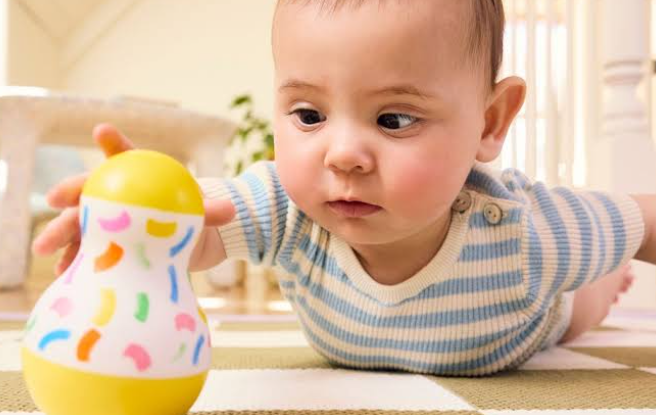
Hand-eye coordination is a fundamental skill that allows children to perform tasks efficiently and effectively. Montessori activities are designed to nurture this skill through engaging, hands-on learning experiences. In this blog post, we’ll explore several activities that can enhance hand-eye coordination in children.
1. Bead Threading
Bead threading is a simple yet effective Montessori activity that helps develop fine motor skills and hand-eye coordination. By stringing beads onto a thread or a thin wire, children practice precision and control as they maneuver the beads. This task not only strengthens their grip but also enhances their ability to focus on the task at hand.
To make this activity even more engaging, you can use beads of different sizes, shapes, and colors. This variation will keep children interested and may even introduce them to basic concepts of color sorting and patterns. As they become more skilled, you can increase the difficulty by introducing smaller beads or longer threads to challenge their coordination even further.
-
- Choose a variety of beads in different colors and sizes.
-
- Use a sturdy thread or string for easy handling.
-
- Encourage the child to create patterns while threading.
-
- Set a timer for an added challenge to complete the task.
-
- Supervise closely, especially for younger children, to ensure safety.
2. Water Pouring
Water pouring is a classic Montessori activity that promotes hand-eye coordination through practical life skills. You can set up a simple pouring station with two containers—one filled with water and the other empty. Children will have to carefully pour the water from one container to the other, which teaches them to control their movements to prevent spills.
This activity can be expanded by introducing different types of liquids or objects to pour, such as sand or rice. You can also provide various sizes of containers, requiring children to adjust the angle and speed of their pouring to successfully transfer the contents without making a mess. This allows them to explore their coordination skills in diverse contexts.
-
- Use safe, non-breakable containers for pouring.
-
- Prepare a splash zone with a towel or mat to contain spills.
-
- Allow children to experiment with different liquid types.
-
- Encourage them to tidy up after the activity to promote responsibility.
-
- Start with larger containers and progressively move to smaller sizes.
3. Scissor Cutting Practice
Using scissors to cut shapes is another engaging way to enhance hand-eye coordination. Children will benefit from learning how to properly hold and operate scissors while following lines or cutting out specific shapes. This not only enhances their fine motor skills but also fosters hand strength and dexterity.
Provide them with various templates, such as straight lines, wavy lines, and more intricate shapes. It’s essential to supervise young children during this activity, but you can gradually introduce more complex designs as they gain confidence in their cutting abilities. Encourage creativity by allowing them to create their own designs or cut out images from magazines.
-
- Provide child-safe scissors to ensure safety.
-
- Begin with simple straight lines before advancing to more complex shapes.
-
- Use colorful paper to make the experience more enjoyable.
-
- Encourage children to freely explore their cutting techniques.
-
- Lead by example, showing them how to cut along the lines.
4. Pin Pushing
Pin pushing is a lesser-known but very effective Montessori activity for enhancing hand-eye coordination. In this exercise, children push pins into a foam board to create designs or patterns. This task requires precision and control, as they must aim carefully to insert the pins without making excessive force.
You can find specialized foam boards made for this activity that come in various colors. Children will enjoy creating shapes or even images, enhancing their creativity alongside their coordination skills. This activity can also be adapted for older children by introducing more difficult patterns or increasing the density of the pins they need to place.
-
- Use a sturdy foam board specifically designed for pin pushing.
-
- Provide a variety of colored pins for visual stimulation.
-
- Encourage children to create specific designs or freeform patterns.
-
- Monitor closely to prevent any accidental injuries.
-
- Set up challenges with time limits or specific designs to enhance engagement.
5. Nature Scavenger Hunt
A nature scavenger hunt is not only a fun outdoor activity but also a fantastic way to develop hand-eye coordination. As children search for specific items like leaves, rocks, or flowers, they will utilize their senses and practice coordination skills as they bend, reach, and grasp objects around them.
To make it educational, you can turn this into a learning opportunity by providing them with a checklist that requires them to find objects of different colors or shapes. Encourage children to place their finds in a bag or basket, which helps refine their hand movements and control as they navigate the natural environment.
-
- Create a checklist with pictures for younger children.
-
- Encourage teamwork by organizing small groups for the activity.
-
- Utilize different terrains to enhance coordination challenges.
-
- Incorporate discussions about the different items found during the hunt.
-
- Provide appropriate containers for them to collect their findings.
Hand-eye coordination is a crucial skill that can be developed through various engaging Montessori activities. By incorporating these exercises into your child’s routine, you provide them with fantastic opportunities for growth while having fun. Remember to adapt the activities to your child’s skill level and make room for creativity to ensure an enjoyable learning experience.