
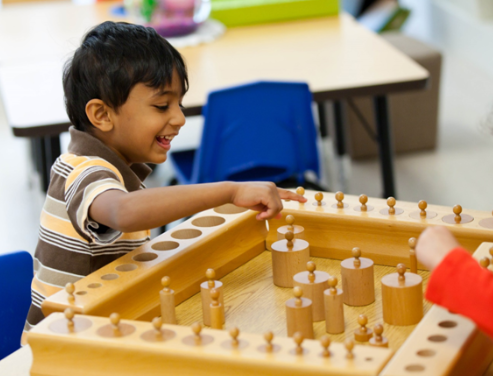
Montessori education emphasizes hands-on activities that encourage children to explore and learn through their senses. Developing fine motor skills is a crucial component, as these skills aid in daily tasks and are foundational for future academic success.
1. Practical Life Activities
One of the cornerstones of Montessori education is practical life activities, which help children build independence and fine motor skills simultaneously. Tasks like pouring, spooning, and buttoning provide valuable practice for hand-eye coordination. For example, pouring water from one pitcher to another allows children to control their movements, strengthening their grasp and coordination.
These practical activities can be easily set up at home. You can use everyday items such as small containers, measuring cups, or even a simple cloth for wiping surfaces. Encouraging children to perform these activities fosters both motor skills and self-sufficiency. Over time, these tasks can become more complex, such as transferring small beads or using large buttons to create art.
-
- Use lightweight, child-sized tools for better control.
-
- Introduce gradual difficulty—start simple, then increase complexity.
-
- Demonstrate the activity first, allowing them to observe.
-
- Incorporate everyday tasks that interest your child.
2. Creative Arts and Crafts
Arts and crafts are fantastic avenues for developing fine motor skills, allowing children to express themselves while honing their dexterity. Activities such as coloring, cutting paper, and constructing models require precise hand movements. For instance, using scissors to cut along a line can significantly enhance the pinching motion required for grasping various objects.
<pMoreover, creative arts encourage children to experiment with different materials, thereby improving their tactile senses. Using tools like paintbrushes, stamps, or craft scissors provides endless opportunities for practicing grip, and manipulation. Setting aside a dedicated space for crafting can turn creativity into a routine learning time.
-
- Incorporate various materials—clay, paper, and fabric for a range of textures.
-
- Encourage free drawing and open-ended projects to maximize creativity.
-
- Always supervise when using sharp objects and ensure safety first.
-
- Try themed projects for context—all seasons, holidays, or nature.
3. Sensory Bin Activities
Sensory bins are another excellent tool used in Montessori education to develop fine motor skills. These bins can be filled with various materials—rice, beans, sand, or water beads—allowing children to explore textures while developing their grip and coordination. Activities like digging, pouring, and sifting through the materials provide countless hours of engagement and skill-building.
By incorporating tools like scoops, cups, and tweezers, sensory bins further refine children’s dexterity. Setting up themed sensory bins—pasta for a cooking theme or sand for a beach theme—can enhance the sensory experience while keeping learning exciting and fresh. You can even make sensory bins seasonal, ensuring that the material and themes align with what children might experience in their environment.
-
- Change the materials frequently to keep children engaged.
-
- Incorporate seasonal themes or current events for relevance.
-
- Use a variety of scooping and pouring tools to increase complexity.
-
- Supervise to ensure safe and appropriate interactions with the materials.
4. Nature-Based Activities
Bringing nature into your Montessori activities not only allows for the development of fine motor skills but also connects children to their environment. Activities like collecting leaves, rocks, or flowers foster motor development through sorting and manipulating these natural items. For instance, threading leaves onto string or creating leaf rubbings can enhance precision and control in their movements.
Nature walks also present opportunities to engage in observational skills, allowing children to pause, pick up, and examine their surroundings. This can lead to the creation of nature collages or pressed flower art. Engaging with nature provides holistic learning experiences that combine science, art, and fine motor skill building in a fun and engaging way.
-
- Schedule regular nature walks and explorations for discovery.
-
- Encourage children to collect and categorize their finds.
-
- Incorporate garden activities, like planting seeds or pulling weeds, to hone skills.
-
- Create art projects from natural materials to blend creativity with nature.
In conclusion, incorporating Montessori activities focused on fine motor skills not only enriches a child’s development but also provides a foundation for future learning. Start implementing these activities in your daily routine, and watch your child’s skills flourish!