
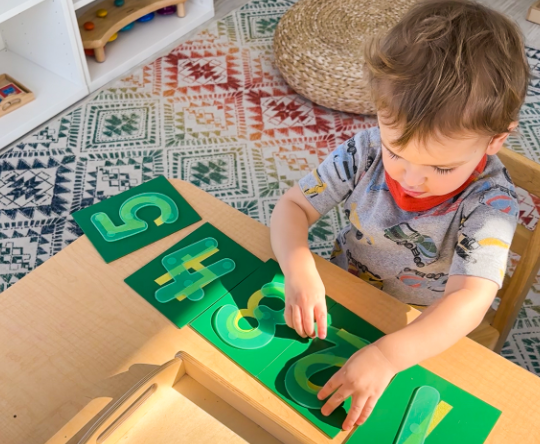
Montessori counting activities for toddlers offer a fun and engaging way to introduce basic math concepts to young learners. These activities emphasize hands-on, sensory experiences that align with the Montessori philosophy, encouraging children to explore and discover at their own pace. In this blog post, we’ll explore several activities designed to spark a love for numbers in your little one.
1. Counting with Nature
One of the most enjoyable ways to help toddlers grasp counting is through nature. Gathering items such as leaves, rocks, or flowers not only allows children to appreciate the outdoors but also provides a tactile experience that enhances learning. For example, during a walk in the park, you can collect leaves of different shapes and sizes. Once home, you can count them together, distinguishing between the types as an added step in classification.
This activity can be customized based on the seasons or even a specific theme, such as colors or shapes. You might choose to collect only round pebbles one day or vibrant flowers the next. By varying the focus and encouraging your child to engage with the activity, you’re personalizing the counting experience to foster both curiosity and understanding.
-
- Go on a nature walk to gather items like leaves or stones.
-
- Count the collected items together while discussing their shapes and colors.
-
- Sort the items into groups for additional classification practice.
-
- Use a basket or box to store collected items for future counting sessions.
2. Numbered Pots and Beads
A classic Montessori activity involves using numbered pots and colorful beads. This setup can be as simple or elaborate as you like. Prepare several small pots or containers and label them with numbers from one to five. Then, provide a matching set of beads, one for each number, in various colors. The goal is to match the number on the pot with the corresponding number of beads.
This practical activity not only teaches counting but also enhances fine motor skills as toddlers pick up beads and place them in pots. The vibrant colors of the beads can also stimulate visual learning. You can broaden the learning opportunity by discussing patterns and colors as they play, making it a well-rounded educational experience.
-
- Label pots with numbers 1 to 5 (or higher for advanced learners).
-
- Provide a variety of beads for engaging visual stimulation.
-
- Encourage your child to match beads to the number on each pot.
-
- Discuss patterns and colors while engaged in the activity.
3. DIY Counting Books
Creating a DIY counting book is a delightful way to integrate storytelling into your counting activities. You can use pictures, stickers, or even drawings to represent numbers visually. Each page can showcase a different number, with corresponding images that your child can count. For example, if you illustrate the number ‘3,’ you might include three stars or three happy faces.
This hands-on approach encourages not only counting but also literacy skills as you read the book together. Additionally, it provides a personalized learning tool that can be revisited over time. Engage your toddler in the process of creating the book, allowing them to choose images or stickers, making it a collaborative endeavor that stimulates both creativity and learning.
-
- Gather materials like cardstock, stickers, and markers.
-
- Make a page for each number, adding corresponding images.
-
- Involve your child in the design and layout of the pages.
-
- Read the book together often to reinforce counting skills.
4. Counting Songs and Rhymes
Incorporating music into counting activities is a wonderful way to engage toddlers. Songs and rhymes are memorable and can help reinforce counting in a playful manner. Many classic children’s songs feature counting themes, like “Five Little Ducks” or “Ten in the Bed.” Singing these songs together can create joyful association and enhance retention of the numbers.
To further foster engagement, you can suggest actions or movements to accompany the songs. For instance, while singing “Five Little Ducks,” you can mimic duck movements or use finger puppets to visually represent the number. The combination of music, movement, and counting will make the learning experience both entertaining and educational.
-
- Choose popular counting songs to sing together during playtime.
-
- Add actions or puppets to aid visual learning.
-
- Encourage your child to create their own counting song.
-
- Incorporate hand-clapping or dancing while counting.
Exploring Montessori counting activities can be incredibly rewarding for both you and your toddler. Each method not only introduces essential math concepts but also cultivates a sense of curiosity and independence in your child. Consider trying out these activities regularly to transform counting from a simple task into a fun, engaging adventure. Start small, enjoy the process, and watch your child blossom into a confident little learner.