
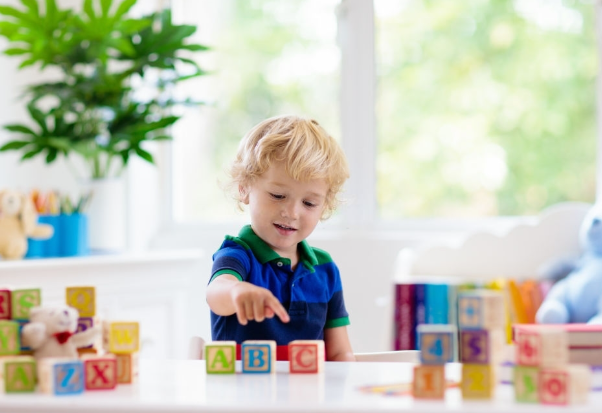
Montessori activities with blocks are a fantastic way to engage young minds while fostering creativity and critical thinking skills. These activities allow children to explore their environment, develop fine motor skills, and enhance their understanding of mathematical concepts all through playful experimentation.
1. Understanding the Importance of Blocks in Montessori Education
In Montessori education, blocks serve as essential learning materials that promote cognitive development. They encourage children to explore spatial relations, balance, and structural integrity. Understanding how to manipulate blocks also cultivates problem-solving skills as children figure out how to build their designs without collapsing.
Moreover, interacting with blocks can support language development. As children engage in block play, they are encouraged to use descriptive language, share ideas, and work collaboratively with peers. This rich vocabulary allows them to articulate their thoughts and feelings more effectively during play.
-
- Choose blocks of various shapes and sizes to enhance creativity.
-
- Encourage children to describe their building process.
-
- Provide a safe, open space for free movement and play.
-
- Incorporate block play into everyday discussions about balance and structure.
2. Engaging Activities Using Blocks
There are countless activities that can be achieved using blocks in a Montessori setting. One engaging activity is the “Bridge Building Challenge,” where children are tasked with creating a bridge that can support the weight of a toy car. This activity involves critical thinking and experimentation as children test different designs and learn what makes a structure stable.
Another favorite is block painting, where children can use blocks as stamps to create patterns on paper. This not only enhances their motor skills but also introduces them to concepts like symmetry and patterns in a fun, creative manner. As they stamp, they can explore colors and textures, expanding their sensory experiences.
-
- Set a challenge or theme for building, such as “bridges or towers.”
-
- Incorporate a variety of materials for block painting, like different types of paint.
-
- Encourage children to critique each other’s structures for constructive feedback.
-
- Document the building process with photos to build reflection skills.
3. Developing Mathematical Concepts Through Blocks
Blocks are not just about play; they can be powerful tools for teaching math concepts. Children can learn about counting, addition, and subtraction as they group blocks, stack them, or create patterns. For example, simply counting blocks while building can reinforce basic numerical skills in a hands-on way.
Children can also explore measurement concepts by comparing the height and width of their block creations. A guided discussion about which tower is taller or which is wider can spark their curiosity and facilitate an understanding of comparative sizes. These concepts lay the foundation for more advanced mathematical reasoning as they grow.
-
- Incorporate counting games while building with blocks.
-
- Use a ruler or tape measure to visually teach children about lengths and heights.
-
- Engage them in discussions about geometric shapes found in their creations.
-
- Challenge them to compare and contrast different structures based on size.
In conclusion, Montessori activities involving blocks provide a multi-layered approach to learning. They not only stimulate creativity and enhance fine motor skills but also serve as a conduit for teaching essential mathematical concepts. Start incorporating block activities into your routines today to witness the engagement and growth of young learners!