
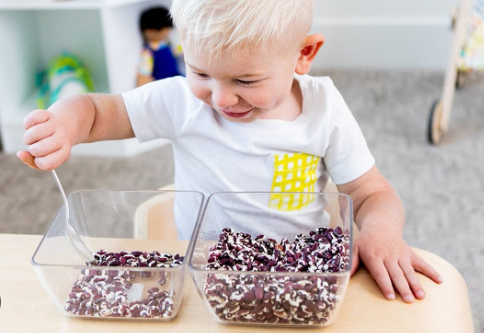
Montessori tray activities provide an excellent opportunity for preschoolers to explore, learn, and develop important skills through hands-on experiences. These activities are designed to foster independence, fine motor skills, and critical thinking abilities in a structured yet playful manner.
1. Practical Life Skills Activities
One of the cornerstones of Montessori education is the emphasis on practical life skills. These activities help children understand daily tasks and routines, fostering a sense of responsibility and independence. For instance, setting up a tray with materials such as scoops, pouring containers, and a variety of small items like rice, beans, or beads can teach children how to transfer objects from one container to another. This simple yet effective activity sharpens their hand-eye coordination and fine motor skills.
Another excellent example is a tray with materials for folding laundry. Providing small, colorful cloths allows children to practice their folding skills while also learning about organization and cleanliness. It’s a fun way for them to take part in household tasks, making them feel more engaged and responsible. These practical life activities provide essential skills that build a foundation for future learning.
-
- Choose activities that reflect daily life.
-
- Use age-appropriate tools and materials.
-
- Encourage children to explain the process.
-
- Rotate activities regularly to maintain interest.
2. Sensory Exploration Activities
Sensory exploration is a vital component of early childhood development, stimulating the senses and encouraging curiosity about the world. A tray filled with different textured materials, such as sand, water beads, or fabrics, can provide a multi-sensory experience that enhances tactile learning. Children can explore these materials with their hands, developing their sense of touch while also engaging their creativity.
Another engaging sensory activity involves creating a “smell tray.” This can include small containers filled with various scents, such as spices, flowers, or essential oils. As children close their eyes to smell each container, they will learn to identify different aromas while also enhancing their language skills by describing what they experience. Sensory activities like these not only captivate young minds but also improve cognitive development.
-
- Incorporate a variety of textures and smells.
-
- Rotate materials to introduce new experiences.
-
- Encourage discussions about what they feel/smell.
-
- Supervise closely to ensure safety, especially with small items.
3. Artistic Creation Activities
Artistic expression is crucial for a child’s emotional and intellectual development. Creating an art tray filled with different crafting materials, such as colored paper, safe scissors, glue, and markers, allows preschoolers to unleash their creativity. Encourage them to mix colors, cut shapes, and create unique artwork. This not only promotes fine motor skills but also gives them the freedom to express their individuality.
To further enhance artistic activities, consider providing nature art options. Using natural elements like leaves, flowers, and twigs can open a new world of exploration while allowing them to create art inspired by nature. This practice cultivates a sense of appreciation for the environment and stirs curiosity about the natural world. They can learn about different shapes, colors, and textures by combining these elements in their artwork.
-
- Safeguard materials to ensure safety.
-
- Encourage free expression without judgment.
-
- Introduce seasonal themes for seasonal art.
-
- Showcase their artwork to inspire pride and confidence.
4. Cognitive Development Activities
Cognitive development activities are imperative for enhancing a child’s critical thinking skills. Consider creating a math tray with counting materials like small blocks, beads, or counters. Children can practice counting, sorting, and even simple addition and subtraction using these materials. This hands-on approach to math helps reinforce concepts in a fun and engaging way.
Puzzles and matching games can also be placed on an engaging tray. These activities enhance problem-solving skills and improve memory. By involving children in activities that require logical thinking and strategy, you build foundational skills necessary for future academic success. Plus, they develop patience and persistence as they work through challenges.
-
- Utilize a variety of manipulatives for counting and sorting.
-
- Introduce puzzles that are age-appropriate.
-
- Encourage independent problem-solving.
-
- Provide a safe space to explore concepts freely.
Montessori tray activities are an enriching way to engage preschoolers in meaningful learning experiences through play. By focusing on practical life skills, sensory exploration, creativity, and cognitive development, you set a solid foundation for their growth. Start incorporating these activities into your routine today and watch your child thrive in their learning journey.