
Montessori pre-writing activities lay the foundation for children to develop strong writing skills. These activities encourage fine motor development, creativity, and independent thinking, vital elements in a child’s early education. Here, we will explore some engaging Montessori-inspired activities that nurture these skills from a young age.
1. Tracing Letters with Sand and Salt
Tracing letters with sand or salt is a sensory experience that makes learning engaging and fun. By pouring sand or salt onto a tray, children can use their fingers to trace letters of the alphabet. This activity incorporates tactile learning, enabling children to solidify their understanding of letter shapes and forms. Additionally, it allows them to practice the motions involved in writing while also developing their hand-eye coordination.
As they trace letters, children can also verbalize each letter’s name and sound, further reinforcing their learning. This multi-sensory approach caters to various learning styles and helps make abstract concepts tangible. You can also incorporate additional layers by prompting children to say words that start with the letters they are tracing.
-
- Use a shallow tray filled with sand or salt.
-
- Encourage children to trace letters while saying them out loud.
-
- Incorporate small toys that start with the traced letter to deepen understanding.
-
- Rotate between letters to maintain interest.
2. Cutting and Gluing Activities
Activities that involve cutting and gluing help develop crucial fine motor skills as well as hand strength, preparing young learners for writing. You can provide children with magazines, colored paper, or even old birthday cards to cut out shapes, letters, or pictures. Once they have cut out their items, they can then glue them onto large sheets of paper, assembling them to create collages or themed art projects.
This not only develops dexterity but also allows children to express their creative ideas freely. As they engage in these activities, it’s also beneficial to discuss what they are creating. This encourages language development and nurtures their imaginative skills, which can complement their writing capabilities.
-
- Provide child-safe scissors for easy handling.
-
- Encourage a variety of projects, from themed collages to simple scene creation.
-
- Introduce new vocabulary during discussions about their creations.
-
- Celebrate their work by displaying it around the home or classroom.
3. Finger Painting and Drawing
Finger painting and drawing provide excellent opportunities for children to explore their creativity while honing their grip and control. These activities allow for free expression using various mediums, including paints, crayons, or markers. Children can draw shapes, letters, or even simple stories, helping to bridge art and literacy in an enjoyable way. Moreover, using fingers or different tools for painting offers varied sensory experiences.
To extend learning, you can encourage children to discuss their artwork or describe the stories behind their drawings. This not only bolsters their fine motor skills but also enhances their vocabulary and narrative abilities. Over time, you can introduce more structured drawing tasks to help them practice specific letters or shapes, evolving their skills gradually.
-
- Set up a dedicated art station with various materials.
-
- Encourage open-ended exploration without focusing solely on the outcome.
-
- Prompt children to describe their art to enhance verbal skills.
-
- Rotate materials regularly to keep the activity fresh and exciting.
4. Bead Stringing and Sorting
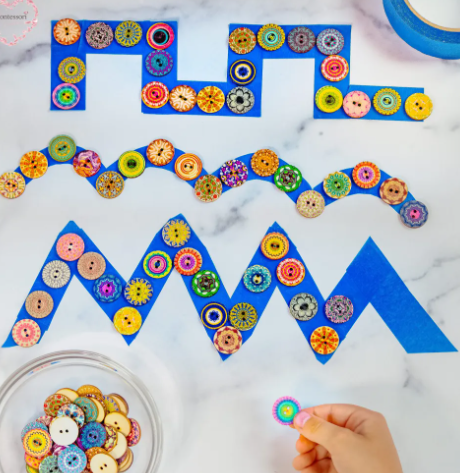
Bead stringing and sorting activities are exceptional for reinforcing hand-eye coordination and strengthening the muscles needed for writing. Providing different types of beads—such as wooden, plastic, or foam—allows children to practice their manipulation skills by threading them onto strings or sorting them by color, size, or shape. This activity is not only engaging, but it also integrates concepts of math and color recognition into writing preparation.
As they string the beads, you can introduce simple patterns to create, enhancing their cognitive skills and teaching them to follow sequences. This is an excellent way for children to practice patience and focus—qualities that are essential for success in writing. Moreover, completed bead projects can be turned into jewelry, offering a tangible sense of achievement and pride.
-
- Use beads with varying sizes for a more challenging experience.
-
- Introduce pattern activities to stimulate cognitive thinking.
-
- Encourage children to create specific designs or color patterns.
-
- Incorporate bead activities during structured learning times to build routines.
5. Nature-Based Writing Activities
Nature-based activities offer a rich environment for pre-writing skills development. Children can use sticks for writing in the sand, leaves for crafting letters, or even stones for creating shapes outside. Engaging with the natural world not only fosters creativity but encourages them to observe and interact with their surroundings deeply.
These activities can also include collecting items such as twigs or pebbles and crafting stories or letters using them. By combining nature and writing, children learn to appreciate their environment while understanding the fundamentals of language. This holistic approach can boost their imagination and inspire future writings.
-
- Take nature walks to collect materials for art and writing.
-
- Encourage outdoor “writing” on surfaces like sand or dirt.
-
- Create storytelling sessions using collected items.
-
- Integrate lessons on environmental respect and observation.
In conclusion, integrating Montessori pre-writing activities into your child’s routine can greatly enhance their fine motor skills, creativity, and overall love for language. As you explore these activities, remember to keep the learning engaging and adapted to your child’s individual needs. Encourage them to enjoy the process, fostering a lifelong appreciation for writing.