
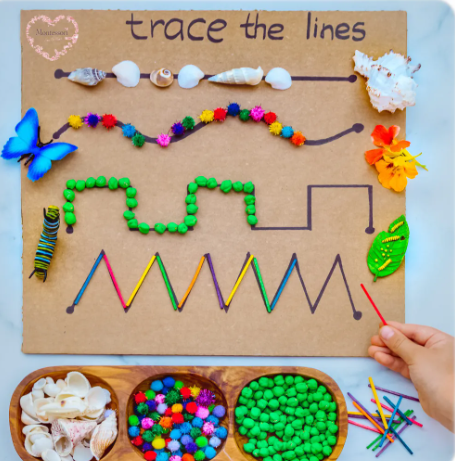
Montessori writing activities for preschoolers offer a unique approach that blends education with creativity, fostering a love for writing from an early age. By designing engaging and hands-on experiences, children can explore language, enhance fine motor skills, and develop their literacy foundations. Here are some effective activities that incorporate Montessori principles.
1. Sand Writing
One of the most enjoyable Montessori writing activities is sand writing. This involves pouring fine sand into a shallow tray and using fingers or writing tools to form letters and words. The tactile experience engages children more effectively than traditional writing methods, allowing them to learn through touch and movement. They can feel the shapes of the letters while exploring different textures, making it a delightful way to practice writing in a relaxed setting.
To set up a sand writing activity, prepare a tray filled with about an inch of sand, ensuring it’s clean and dry. Provide different writing tools, such as fingers, sticks, or even sculpting tools, and encourage kids to trace letters, numbers, or shapes. As they practice, you can prompt them by saying the sounds of the letters or asking them to think of words starting with a particular letter.
-
- Use clean, fine sand for a pleasant texture.
-
- Encourage free exploration of letters and shapes.
-
- Incorporate letter sounds for phonetic reinforcement.
-
- Engage in discussions about words they write.
2. Letter Formation with Clay
Using clay or playdough for letter formation is another effective Montessori activity. This technique combines kinesthetic learning with sensory play, reinforcing both fine motor skills and letter recognition. By rolling, pinching, and flattening the clay into letter shapes, preschoolers gain a deeper understanding of how letters are formed physically.
To implement this activity, provide different colors of clay and shape tools. Start by demonstrating how to form each letter using your hands or tools, then let the children explore on their own. You can encourage them to make their names or simple words. This creative process allows them to visualize and manipulate letters, building confidence as they learn.
-
- Choose non-toxic, easy-to-mold clay.
-
- Demonstrate letter formation before letting them explore.
-
- Encourage them to experiment with both uppercase and lowercase.
-
- Incorporate art supplies for decoration afterward.
3. Nature Writing with Found Objects
Combining nature and writing can create a stimulating experience for preschoolers. This activity involves collecting natural items like leaves, twigs, and stones to form letters or even words on the ground. Engaging with nature not only enhances creativity but also nurtures a sense of observation and appreciation for the environment.
To start a nature writing project, take a walk with the children to collect materials. Once back indoors or in a designated outdoor area, help them arrange the items into letter shapes. You can turn this into a collaborative activity where each child contributes to forming a single word or phrase. This sharing fosters teamwork and communication skills as well.
-
- Explore different types of environments to gather materials.
-
- Discuss the unique features of each object they collect.
-
- Encourage cooperative group activities for collective letters.
-
- Document their creations with photos for reflection later.
4. Tracing Letters with Water and a Brush
Another vibrant Montessori writing activity is tracing letters with water and a brush. This simple yet engaging method allows preschoolers to practice letter formation in a noisy and visually appealing way. They can use a water-filled brush on surfaces like sidewalks or chalkboards, creating wet letters that disappear as they dry, leaving children fascinated and eager to repeat the process.
To initiate this activity, provide a water-filled container and large brushes. Set it up outside on a warm day for added fun, or indoors with a chalkboard. Demonstrate how to trace letters with the brush, encouraging them to follow along. This gentle introduction to writing through water also emphasizes the importance of technique, as they learn to control the brush and get used to the shapes of different letters.
-
- Select a warm day for outdoor play, if possible.
-
- Keep brushes large to make it easier for small hands.
-
- Incorporate alphabet cards for related tracing practice.
-
- Remind them to have fun even as they practice correctly.
5. Story Stones for Narrative Development
Using story stones is a fantastic way to encourage preschoolers to engage both their imagination and writing skills. Story stones are painted or decorated with different images representing characters, actions, or settings. By using these stones, children can create their own stories, enhancing their narrative skills while practicing basic writing concepts.
To create your own set of story stones, gather smooth stones and paint or draw various images on them. After creating the stones, present them as storytelling prompts. You can give each child a few stones and let them invent stories, encouraging them to use the images as inspiration. As they narrate their stories, you can help by jotting down their words to create a visual representation of their tales.
-
- Use durable paint for stone decoration.
-
- Select diverse images for a rich storytelling experience.
-
- Encourage cooperative storytelling for group dynamics.
-
- Document their stories in a scrapbook for future sharing.
Incorporating these Montessori writing activities into your preschooler’s routine can ignite a passion for writing and creativity. By engaging their senses and providing hands-on experiences, you help them build essential skills that serve as the foundation for a lifetime of literacy. Start experimenting with these activities today and watch your little one’s love for writing blossom!