
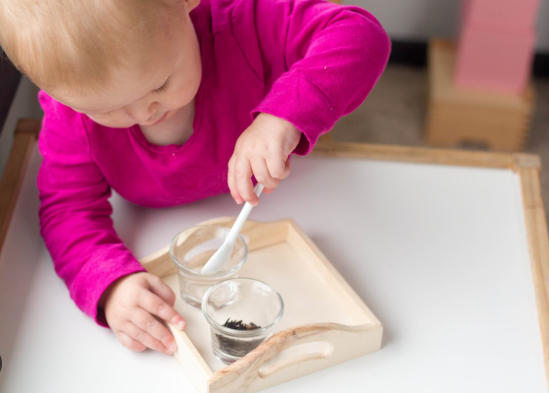
Montessori spoons are more than just utensils; they are wonderful tools for developing fine motor skills and promoting independence in young children. By incorporating spoons into various activities, educators and parents can create engaging, hands-on experiences that foster exploration and creativity.
1. Understanding Montessori Spooning Activities
Montessori spoons are designed to enable children to practice transferring materials from one container to another. This not only helps improve their hand-eye coordination and dexterity but also introduces them to practical life skills. In a Montessori environment, these activities are often made more exciting by using colorful spoons and varied materials, which can capture the child’s interest more effectively.
Children naturally gravitate toward activities that allow them to use their hands, so spoons can be a fantastic way to motivate them. For instance, you could present different kinds of rice, beans, or even small toys and challenge the children to sort or transfer them using different spoons. This fosters a sense of accomplishment as they master new skills.
-
- Introduce various materials to keep interest high.
-
- Encourage exploration by allowing children to select their items.
-
- Provide different-sized spoons for diverse challenges.
-
- Supervise closely to ensure safety, especially with smaller items.
2. Engaging Activities Using Spoons
One popular activity is the “Spoon Transfer” game, where children use a spoon to move items from one bowl to another. You can set it up by placing two bowls on a table, one filled with small objects such as buttons or marbles and another empty. The goal is to transfer all the items from one bowl to the other using just the spoon. Start simple and gradually increase the complexity by adding more items or varying the sizes of the materials.
Another engaging option is the “Color Sorting” activity, where children use spoons to transfer items of the same color into corresponding bowls. This helps improve not only their spoons handling skills but also their color recognition and categorization abilities. You can use colored beads or pom-poms, making it a vibrant and visually appealing experience for your little ones.
-
- Start with lightweight items for ease of transfer.
-
- Rotate materials to maintain engagement and learning opportunities.
-
- Pair the activity with fun songs or themes (like colors) to enhance learning.
-
- Incorporate timing challenges to keep motivated children engaged.
3. Benefits of Montessori Spooning Activities
One significant benefit of Montessori spooning activities is their contribution to the development of fine motor skills necessary for later tasks like writing. Using spoons helps strengthen the small muscles in a child’s hands and fingers, making them better equipped to handle pencils and other tools as they grow. Additionally, these activities promote concentration and focus, as children must pay attention to their movements to perform the task successfully.
Furthermore, these activities cultivate a sense of independence. By engaging in spoons tasks, children experience the satisfaction of completing a task on their own, encouraging self-confidence. It also reinforces cognitive skills, as kids will develop problem-solving abilities while tackling activities that may come with some challenges, such as resettling items that slip out of their spoon.
-
- Encourage children to reflect on their accomplishments.
-
- Mix in verbal encouragement to enhance their confidence.
-
- Reinforce the idea of patience by letting them try again after mistakes.
-
- Create a calm workspace to facilitate concentration.
In conclusion, incorporating Montessori spoons into your children’s activities offers an enjoyable and enriching way to build essential skills. By providing opportunities for exploration and independence, you encourage not only their developmental growth but also their love for learning. Why not start a new spoons activity today to foster creativity and fine motor development?