
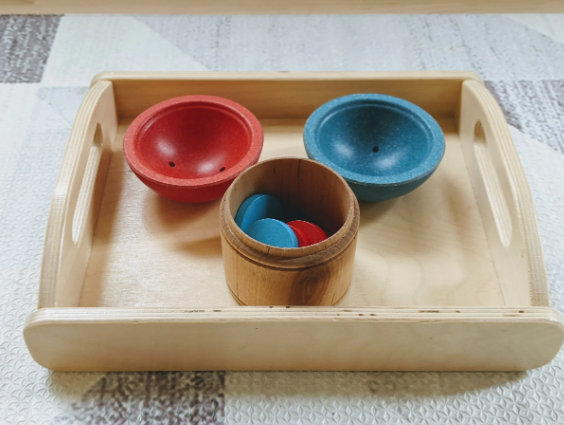
Montessori matching activities are an excellent way for preschoolers to develop critical cognitive skills while having fun. These activities not only encourage independent learning but also promote concentration, memory retention, and fine motor skills. In this blog post, we will explore several engaging Montessori matching activities that can be easily implemented at home or in the classroom.
1. Nature Matching Cards
One of the most delightful ways for preschoolers to connect with their environment is through nature matching cards. These cards can feature various plants, animals, or natural objects, such as leaves, flowers, and rocks. You can either purchase pre-made matching cards or create your own using images printed from the internet. By engaging with these cards, children can learn about different species while enhancing their visual recognition and memory skills.
To implement this activity, lay out the nature matching cards face up and encourage the children to find pairs that correspond. As they work independently or in small groups, you might facilitate discussions about each item, asking questions such as, “What color is this flower?” or “Where might we find this animal?” This promotes not only matching skills but also language development and critical thinking.
-
- Choose a variety of nature themes (animals, plants, or habitats).
-
- Use bright and engaging images for better visual recognition.
-
- Encourage conversation about each item to enhance vocabulary.
-
- Rotate the cards regularly to keep the activity fresh.
2. Color and Shape Matching Activities
Color and shape matching activities are foundational in early childhood education as they help children understand spatial relationships and improve their visual discrimination skills. You can create simple color and shape matching games using colorful blocks, shape cutouts, or even household items. For instance, you can cut out different shapes from construction paper and provide matching containers for children to place them in.
As children engage in these activities, prompt them to talk about their selections. Ask questions such as, “What shape is this?” and “Can you find something blue?” This kind of questioning not only enhances their vocabulary but also encourages problem-solving skills as they sort and classify the items based on color and shape.
-
- Gather various colored and shaped items around the house or classroom.
-
- Encourage children to describe their thought process as they match items.
-
- Incorporate songs or rhymes related to colors and shapes to reinforce learning.
-
- Introduce more complex shapes as kids master the basics.
3. Sound Matching Games
Engaging preschoolers in sound matching games can significantly enhance their auditory discrimination and listening skills. These activities can involve matching sounds from nature, instruments, or common household noises. You could create a sound matching game using recordings of different birds, or even use simple musical instruments like tambourines or maracas to introduce sounds.
To set up this activity, play one sound at a time while asking the children to identify the source. After they have practiced identifying the sounds, encourage them to match the sounds to corresponding images or objects. This not only fosters listening skills but also gives them a fun way to explore the world of sounds around them.
-
- Select a variety of sounds that are easily distinguishable.
-
- Use audio recordings or live sound demonstrations for engagement.
-
- Encourage the children to create their own sound matching cards.
-
- Make it a game by timing how quickly they can match sounds.
4. Number and Quantity Matching
Matching activities that involve numbers and quantities are essential for building a strong mathematical foundation. Children can learn to match numerals with their corresponding quantities using objects such as blocks or buttons. For example, you can create cards with numbers and provide a pile of blocks, encouraging children to match the numeral to the correct number of blocks.
As they work on matching the numbers to the quantities, interact by asking, “How many blocks do you have?” or “Can you find the number that matches your blocks?” This encourages counting and understanding of numbers in a fun, hands-on manner. Such activities also help to reinforce the concept of one-to-one correspondence, a critical skill in early numeracy.
-
- Use various objects like buttons or small toys for counting.
-
- Create visually appealing number cards for motivation.
-
- Encourage children to count aloud as they match numbers.
-
- Gradually introduce simple addition or subtraction as they progress.
Montessori matching activities are a fantastic way to engage preschoolers in meaningful learning experiences while nurturing their natural curiosity. By incorporating these fun activities into your routine, you can help them develop essential skills while enjoying the process. Why not start today by setting up one of these activities and see how much your child can learn and grow?