
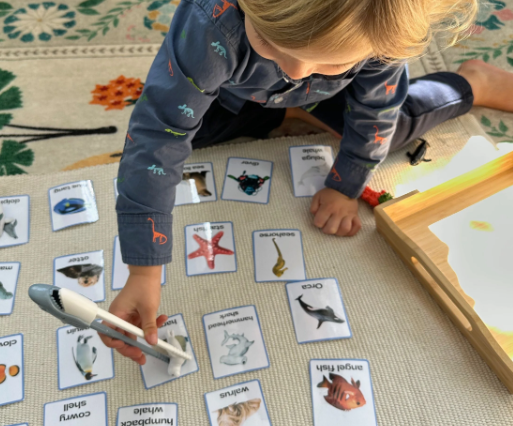
Montessori education emphasizes hands-on learning, independence, and respect for a child’s natural development. When the weather keeps your kids indoors, it may seem challenging to provide engaging activities. Luckily, there are countless indoor Montessori activities that can be both fun and educational.
1. Practical Life Activities
Practical life activities serve as the foundation of Montessori learning. These activities encourage children to develop essential skills by performing everyday tasks that promote independence and responsibility. For instance, setting a table, pouring water, or folding laundry can help enhance fine motor skills and promote self-confidence in young children.
When engaging in practical life activities, provide opportunities for children to practice pouring, spooning, and transferring objects. Select child-sized tools and materials that allow them to work efficiently and safely. Activities can be adapted based on age; younger children might enjoy simpler tasks, while older kids can handle more complex challenges like meal prep or gardening indoors.
-
- Set up a dedicated space for practical life activities like a mini kitchen or designated area with supplies.
-
- Rotate activities regularly to keep things fresh and interesting.
-
- Encourage independence—let children complete activities without constant adult help.
-
- Use child-friendly tools and materials to ensure safety.
2. Sensorial Activities
Sensorial activities help children refine their senses and make sense of the world around them. These activities involve tactile experiences that promote exploration and discrimination of various sensory inputs like touch, taste, sound, sight, and smell. For example, sorting objects by texture or sound can provide valuable learning experiences.
To create engaging sensorial activities at home, consider setting up a sensory bin filled with various materials like rice, beans, or sand. Include tools like scoops, measuring cups, and small containers to enhance play and learning. You can also incorporate scented items like herbs or spices for a multi-sensory experience that captivates young learners.
-
- Choose materials that are safe and appropriate for your child’s age.
-
- Incorporate a variety of textures, colors, and scents to stimulate the senses.
-
- Designate a space for exploration, like a table or mat, to keep mess contained.
-
- Encourage open-ended play and observation, allowing children to express their findings.
3. Creative Arts and Crafts
Creative arts and crafts stimulate a child’s imagination while enhancing fine motor skills and creativity. Montessori methods encourage exploration through various art mediums, including painting, drawing, and sculpting. Setting up an art corner with easy-to-reach materials allows children the freedom to create whenever inspiration strikes.
Using recycled materials for art projects can unleash creativity while promoting environmental awareness. Simple projects like making a collage from old magazines or creating sculptures from cardboard promotes hands-on learning. Provide guidance without dominating the process; let children explore their ideas, leading them toward artistic expression and critical thinking skills.
-
- Provide a variety of materials—papers, paints, scissors, and glue.
-
- Encourage messy play; cover surfaces with newspapers or old sheets.
-
- Foster creativity by not giving too many instructions—let them lead.
-
- Incorporate themes into art projects, such as nature or seasons.
4. Language and Literacy Activities
Language and literacy skills develop through engaging activities that encourage reading, writing, and conversation. Montessori education provides various avenues to explore language, including storytelling, letter recognition, and vocabulary expansion. At home, you can create a literacy-rich environment by incorporating books and interactive language activities.
Consider setting up a “library corner” where children can choose books that interest them. Interactive storytelling sessions using puppets or props can enhance engagement. Additionally, writing materials should be readily available, enabling kids to practice their writing skills through journaling or creating homemade greeting cards.
-
- Create a cozy reading nook or library space filled with age-appropriate books.
-
- Use storytelling techniques with props or visual aids to boost engagement.
-
- Encourage journaling or letter writing as regular practice.
-
- Incorporate vocabulary games or word matching to make learning fun.
5. Scientific Exploration and Discovery
Scientific exploration stimulates curiosity and encourages critical thinking. Montessori methods allow children to investigate the world through hands-on experiments and observations. Set up simple science experiments at home, like growing plants or creating a volcano with baking soda and vinegar, to spark interest in natural phenomena.
Exploring the world of nature is also possible indoors; you can observe insects or plants under magnifying glasses, or set up a simple microscope station. Documenting findings in a science journal will encourage children to ask questions and explore deeper into the scientific method. This encourages not only scientific understanding but also a lasting love of learning.
-
- Collect simple household items to create science experiments.
-
- Encourage discussion of observations and findings.
-
- Utilize simple tools like magnifying glasses for exploration.
-
- Help children document their experiments, fostering a sense of achievement.
Indoor Montessori activities can be a fantastic way to foster a child’s development while keeping them engaged during inclement weather. Each of these activities promotes learning in a fun and interactive way. If you’re inspired, consider implementing a few of these ideas to create a nurturing and stimulating environment at home.