
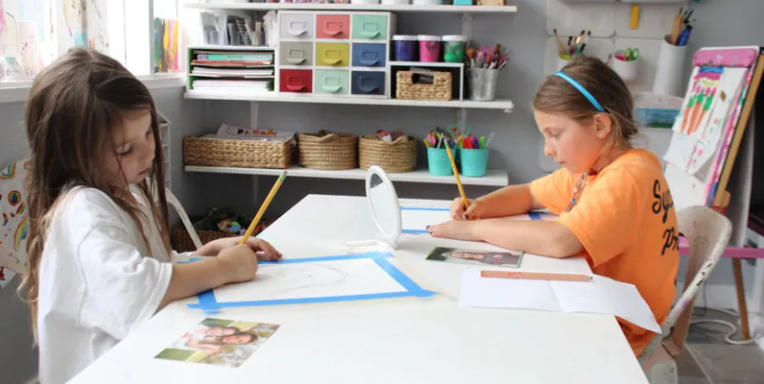
Drawing is a wonderful way for kids to express themselves and capture the world around them. Portrait drawing, in particular, allows young artists to learn about shapes, shadows, and emotions while creating something beautiful. This guide will help budding artists get started on their journey to sketching smiles!
Understanding the Basics of Portrait Drawing
Before diving into a portrait, it’s essential to understand the key features of a face. Start by observing how faces are structured—there’s a general shape to the head, and each feature has its own place. For instance, the eyes are usually halfway down the head, while the nose is about halfway between the eyes and the chin. Encourage kids to break down the face into simple shapes like circles and ovals; this makes it easier to draw. Remember, the goal is to capture the essence of the person, so it doesn’t have to be perfect!
Practicing Proportions and Features
One of the biggest challenges in portrait drawing is getting the proportions right. Kids should practice drawing different facial features separately—like eyes, noses, and mouths—before putting them together. Encourage them to focus on the unique characteristics of each feature; for example, some people have wide smiles, while others have narrow ones. A great tip is to draw lightly first with a pencil, making it easier to erase and adjust mistakes as they practice. Once they feel confident, they can combine the features into a complete face!
Adding Personality with Expressions and Details
Portraits come to life with expressions and unique details. Encourage kids to think about what makes their subject special—Is it a bright smile? Sparkling eyes? A particular hairstyle? Adding these personal touches not only enhances the portrait but also helps convey the person’s personality. Kids can experiment with different expressions, from happy to thoughtful, to see how they change the overall feeling of the drawing. Coloring can also be used to add depth; using light and shadow can make the portrait appear more three-dimensional and lively.
Conclusion
Drawing portraits can be a joyful and fulfilling experience for kids, combining creativity with observation skills. Encourage them to practice regularly, keep experimenting with different techniques, and most importantly, have fun while sketching smiles! The more they draw, the better they’ll become, and who knows? They might just discover a lifelong passion for art! So grab some pencils and paper, and let the portrait magic begin!