
Unlock Your Artistic Potential: Top Drawing Techniques for Beginners
Drawing is a wonderful form of expression that can captivate and communicate emotions, ideas, and stories. For beginners, understanding some fundamental drawing techniques can set the stage for a fulfilling artistic journey. Whether you aspire to sketch landscapes, portraits, or abstract designs, these essential techniques can help unlock your creative potential.
Understanding Form and Structure
One of the key aspects of drawing is understanding the basic forms that make up objects and characters. Start with simple shapes—cubes, spheres, and cylinders—as they are the building blocks of more complex designs. When you break down what you want to draw into these fundamental shapes, it becomes easier to capture their true proportions and dimensions. For instance, when sketching a human figure, consider the body as a series of spheres and cylinders, which will help you achieve a more realistic representation. Practicing this technique not only enhances your observational skills but also boosts your confidence as you begin to tackle more intricate subjects.
Mastering Shading Techniques
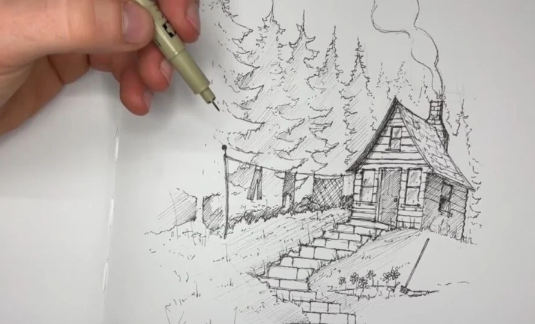
Shading is crucial for adding depth and dimension to your drawings. It can transform a flat image into a three-dimensional object. There are several techniques to employ, such as hatching, cross-hatching, and stippling. Hatching involves using parallel lines to create shadow, while cross-hatching adds more complexity by crossing lines. Stippling, on the other hand, uses dots to achieve varying shades. Practicing these methods will allow you to depict light and shadow effectively, giving your work a more lifelike quality. Start with basic objects like apples or spheres to experiment with different shading techniques before moving on to more detailed subjects.
Developing Your Own Style
As you begin to build your skills, it’s essential to cultivate your own artistic voice. Look at various artists and styles to see what resonates with you, but don’t be afraid to put your unique spin on your work. Keep a sketchbook to experiment with different materials, techniques, and ideas without the pressure of creating a finished piece. This practice can help you discover what you truly enjoy and what you’d like to convey through your art. The more you draw, the more you will develop your style, making your artwork uniquely yours.
In conclusion, the journey of drawing is one of exploration and creativity. By understanding form and structure, mastering shading techniques, and developing your own style, you’ll start to see your skills flourish. Remember, practice is key, so pick up your pencil, explore these techniques, and have fun bringing your artistic vision to life. Embrace your creativity, and who knows? You might just surprise yourself with what you can create!