
Mastering the Basics: Your Ultimate Guide to Drawing Techniques
Drawing is not just about talent; it’s a skill that anyone can learn with practice and dedication. Whether you’re a complete beginner or looking to refine your skills, mastering the basics is essential. This guide will help you understand fundamental techniques that are crucial for developing your artistic abilities.
Understanding Line and Shape
Lines and shapes form the backbone of any drawing. Every object is made up of simple shapes: circles, squares, and triangles. Start by practicing these shapes in different sizes and orientations. Experiment with varying the pressure of your pencil to create thin and thick lines. This exploration will help you gain confidence in controlling your tool. Once you feel comfortable, try combining these shapes to create more complex forms, such as animals or simple structures. This fundamental exercise lays the groundwork for all your future projects.
The Importance of Shading
Shading is the technique that adds depth and dimension to your drawings. It transforms flat shapes into three-dimensional objects by imitating how light interacts with surfaces. Begin by identifying a light source in your drawings, as this will guide where the highlights and shadows should fall. Use techniques like hatching (lines in one direction) and cross-hatching (intersecting lines) to build up texture and form. Practice shading with different materials, from pencils to charcoal, to understand how each medium behaves. This will not only enhance your drawings but also add a dramatic flair.
The Power of Perspective
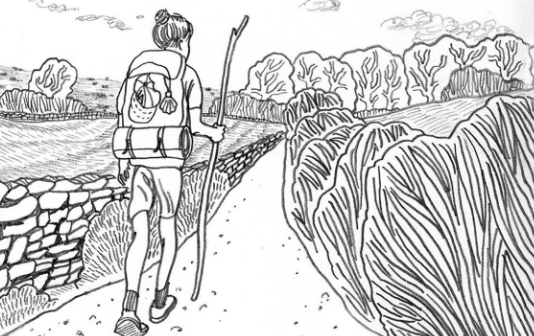
Perspective is a crucial element that makes your drawings feel realistic and grounded. It helps convey depth in a two-dimensional space by manipulating the size and placement of objects. Start with one-point perspective, where all lines converge at a single point on the horizon. This technique is often used for drawing roads or railway tracks. Gradually advance to two-point and three-point perspectives for more complex scenarios, like buildings or cityscapes. Understanding perspective will elevate your work, giving it a sense of realism and space that captivates viewers.
Conclusion
Mastering these basic drawing techniques—lines and shapes, shading, and perspective—serves as a solid foundation for your artistic journey. With practice, you will notice improvement in your skills, confidence, and overall enjoyment of drawing. Remember, the key to becoming a better artist is to keep learning and experimenting. So grab your pencils and start creating! Happy drawing!